
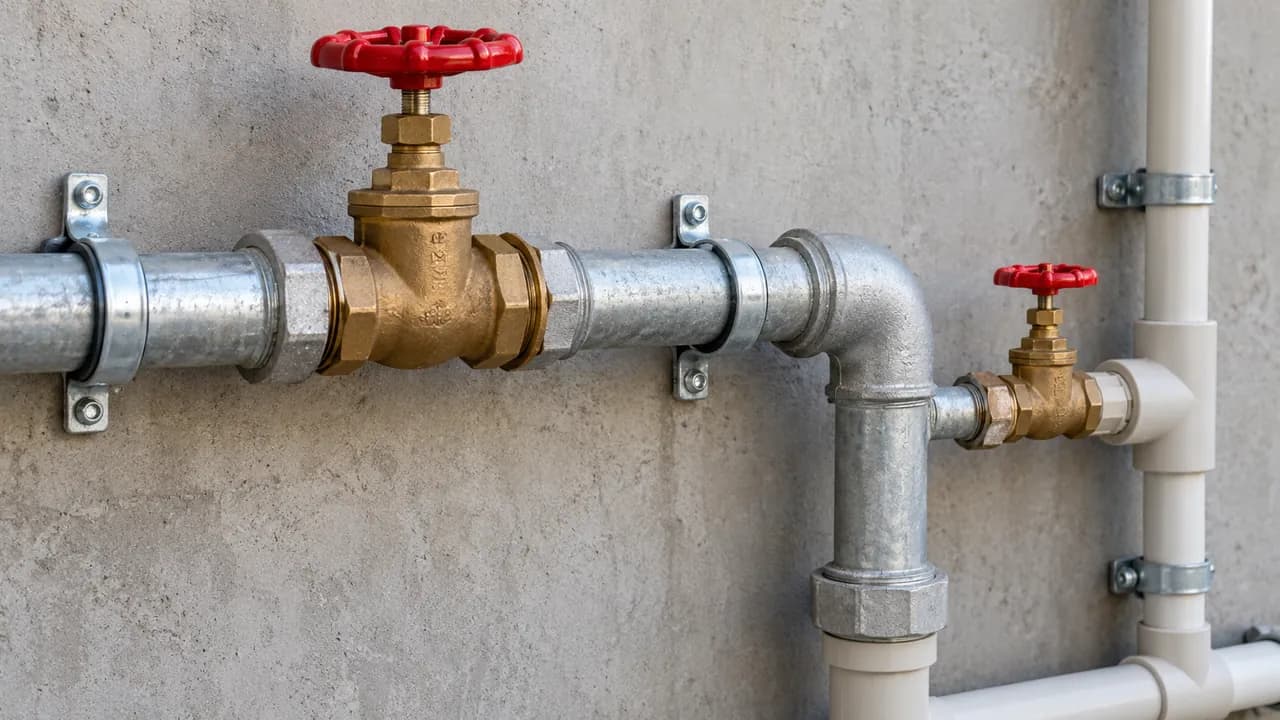
Water requirements vary with the proposed operation. A dry assembly business and a wash-intensive process may need very different arrangements, even in buildings of similar size. Before occupation, establish what your operation needs, what the premises can provide and how wastewater will be managed.
Do not treat the previous occupier’s arrangements as confirmation that your process is suitable. Use a written process description and qualified technical advice to identify the checks that apply.
Describe demand before asking about capacity
Prepare a list of activities using water: production, cleaning, cooling, staff facilities and any other relevant use. Ask your equipment suppliers and process specialists for the required flow, pressure and water-quality conditions. Distinguish normal operation from peak demand and start-up conditions.
Record when those demands occur. Several machines operating together may create a different requirement from the same machines used in sequence. Separate measured information from estimates and state the assumptions clearly.
Do not select a property solely because someone describes the supply as “strong”. Ask what has been measured, where, when and under which operating conditions.
Confirm the supply arrangement with the relevant operator
Identify the water operator serving the premises and establish whether the property has an individual account, a shared arrangement or another supply structure. Request meter details, recent bills where the owner can provide them, and available connection records.
For an example of the questions involved, Air Selangor’s developer guidance addresses the water tapping source, pressure, pipe size and technical design information. It is a development application reference, not proof of capacity at an existing factory or a nationwide procedure. Air Selangor water application guidance.
Ask the relevant operator and your consultant to confirm any change required for your proposed demand. Obtain written information on approvals, works, costs and timing where applicable. Do not commit to a production date based on an unverified assumption that an upgrade will be straightforward.
References: Air Selangor water application guidance
Check internal systems and interruption planning
Request available drawings and service records for tanks, pumps, internal pipework and treatment equipment. Have competent specialists assess their condition and suitability for the proposed use. Avoid treating an installed tank as evidence of adequate usable storage.
Clarify ownership and maintenance responsibilities, particularly in multi-occupier premises. Determine who can isolate the supply, who handles leaks and how charges are allocated if a shared meter is involved.
Review the consequences of an interruption with your operations team. Any contingency supply or storage arrangement should be checked for suitability, safety and necessary approvals. This article does not specify a universal storage period or pressure requirement.
Trace wastewater from the process to its destination
Describe each wastewater stream, including its likely quantity and characteristics. Ask a qualified environmental professional to determine which requirements and treatment arrangements apply. Do not assume that process wastewater can enter a stormwater drain or that a sewer connection automatically authorises its discharge.
The Department of Environment publishes the Environmental Quality (Industrial Effluents) Regulations 2009 and technical guidance on industrial effluent characterisation and treatment-system monitoring. These are relevant reference points, but applicability and compliance must be assessed against the actual process. DOE industrial effluent regulations and DOE industry guidance.
Request existing system drawings, relevant correspondence and monitoring records where available. Ask whether changes to the process or discharge require further action before occupation.
References: DOE industrial effluent regulationsDOE industry guidance
Turn unanswered questions into handover conditions
Agree who will complete any necessary supply or wastewater works and who pays for design, approvals, installation and ongoing maintenance. Record the evidence required to demonstrate readiness, rather than relying on a verbal promise that services will be available.
Include the relevant specialists in the handover review. Verify account arrangements, access to equipment, maintenance responsibilities and the operating information your team needs.
The outcome should be a documented plan matching the premises to your process. A property listing, previous bill or installed treatment unit cannot substitute for operator confirmation and professional assessment.
Sources and scope
General educational guidance, not professional certification or transaction-specific advice. Read each source in its stated jurisdiction and version. Confirm actual site conditions, approvals, legal obligations, insurance, quotations and technical suitability with the appropriate authorities and qualified advisers.
- Air Selangor water application guidance
Air Selangor
- DOE industrial effluent regulations
Department of Environment (DOE)
- DOE industry guidance
Department of Environment (DOE)
Source review date: . This is separate from the publication date.
Looking for space that fits your operation?
Put your requirements in one place before arranging your next viewing.
Prepare your property brief