
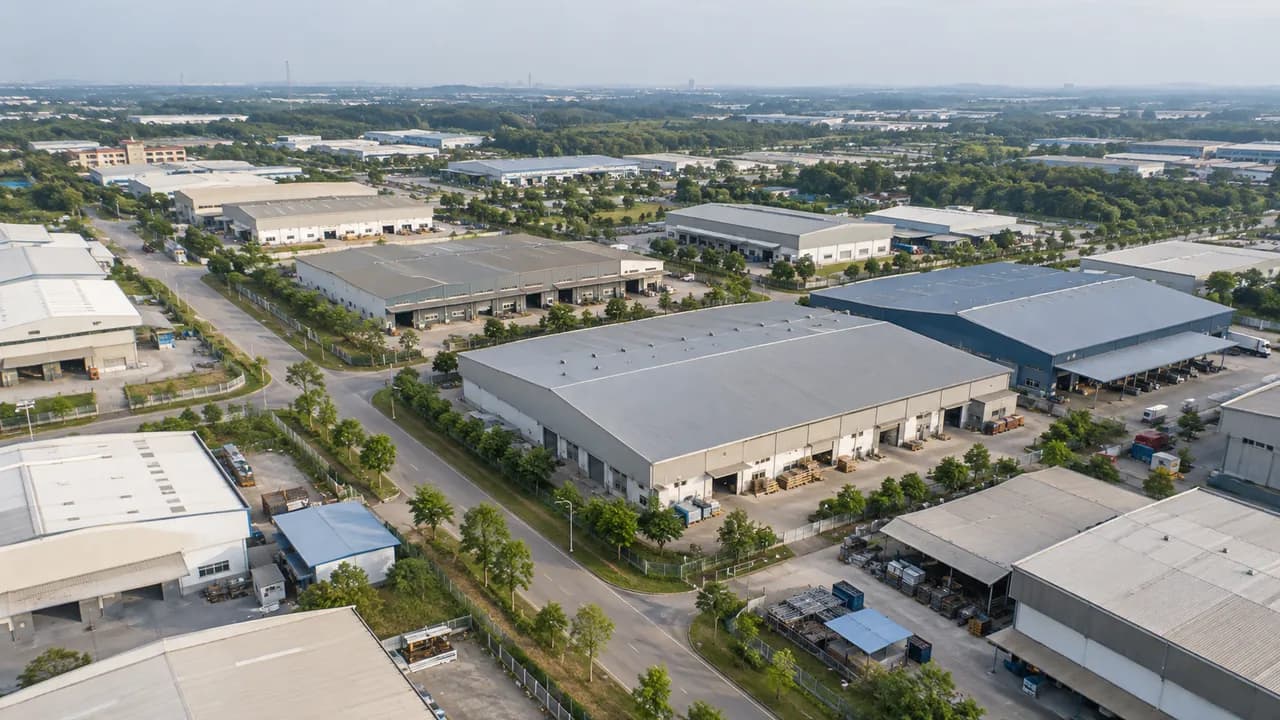
An industrial-looking neighbourhood can be a sensible place to begin a property search. It cannot confirm that a particular lot is suitable for your proposed operation. Before choosing a factory or industrial site, separate three questions: what the title records, what the planning position allows, and what your specific activity requires.
This guide helps buyers and tenants organise those questions. It is general education, not legal advice or confirmation that a particular business can operate at a particular address.
Start with the correct jurisdiction and lot
Identify the state, local authority, lot number and relevant title before seeking advice. Ensure every plan and document concerns the same property, especially where several adjoining lots are marketed together.
The Department of Director General of Lands and Mines, or JKPTG, states that the National Land Code concerns land administration in Peninsular Malaysia and does not apply in Sabah or Sarawak. Do not transfer Peninsular procedures to those states without appropriate local advice.
For a proposed rental, also clarify whether you will occupy the entire property or a defined portion. The area shown on a marketing plan should match the premises described in the proposed agreement.
References: Department of Director General of Lands and Mines, or JKPTG
Ask a solicitor to interpret the title position
Request an appropriate current title search and supporting documents through your adviser. Ask the solicitor to explain ownership, tenure, relevant conditions, restrictions and recorded interests affecting the proposed transaction or occupation.
Treat restrictions and consent issues as matters to resolve, not minor wording to skip. JKPTG's landowner guidance identifies restrictions in interest, caveats and other interests as relevant considerations in land transfers. The necessary steps depend on the actual title and transaction.
Record the answer to a practical question: can this party grant the rights being offered, on the proposed terms, and what remains outstanding? Avoid concluding that a photocopied title or a seller's description establishes the complete legal position.
References: JKPTG's landowner guidance
Check planning information separately
Ask a qualified planning adviser or the relevant local authority to identify the applicable plan and the position for the actual lot. Keep the plan name, version, status and map reference with the advice.
PLANMalaysia's explanation of local plans places their preparation within the Town and Country Planning Act framework. Use that as background, then obtain the location-specific answer rather than assuming a general map settles every question.
Ask whether the proposed activity, building works or change of use requires an application, and which conditions would matter. Distinguish a draft proposal from an operative planning document. If an online map and written information appear inconsistent, request clarification before treating either as decisive.
References: PLANMalaysia's explanation of local plans
Describe the activity precisely
“Manufacturing” may be too broad for a useful assessment. Prepare a short operational brief explaining the products, processes, materials, operating pattern and proposed alterations. Include any characteristics the adviser says could affect the assessment.
For example, two businesses assembling products may have very different processes if one also undertakes coating or chemical treatment. This is a reason to disclose the actual operation, not a claim that either activity automatically receives or fails approval.
Ask the relevant professionals to identify any additional agency requirements for that operation. Record which matters have been confirmed, which need applications and which cannot yet be determined. A previous occupier's activity should be treated as context, not permission for a new operator.
Make unresolved matters visible before commitment
Create a short decision record containing the title findings, planning advice, proposed-use assessment and outstanding conditions. Give each unresolved issue an owner and a next step.
Discuss with your solicitor whether the transaction documents should address necessary confirmations, consents or other dependencies. Do not assume a reservation payment or informal promise protects you if the intended use proves unsuitable.
A sound site decision comes from matching the right documents to the right lot and the real operation. Where the evidence is incomplete, the useful next step is a specific professional check, rather than a broader assurance that the property is “industrial”.
Sources and scope
General educational guidance, not professional certification or transaction-specific advice. Read each source in its stated jurisdiction and version. Confirm actual site conditions, approvals, legal obligations, insurance, quotations and technical suitability with the appropriate authorities and qualified advisers.
- Department of Director General of Lands and Mines, or JKPTG
Department of Director General of Lands and Mines (JKPTG)
- JKPTG's landowner guidance
Department of Director General of Lands and Mines (JKPTG)
- PLANMalaysia's explanation of local plans
PLANMalaysia
Source review date: . This is separate from the publication date.
Looking for space that fits your operation?
Put your requirements in one place before arranging your next viewing.
Prepare your property brief